

St Lucia is often described by what surrounds it, a small coastal town enveloped by the remarkable iSimangaliso Wetland Park, where estuary, forest, dune systems, and ocean converge. Here, nature is not confined to distant viewpoints or fenced reserves. It threads itself through daily life, moving quietly between gardens, along sandy paths, beneath leaves, and across walls. While larger animals understandably capture the imagination, another world exists alongside them — smaller, subtler,...
Painted Wolves of Zululand: When the Wild Dogs Return
Posted on Fri February 27, 2026.
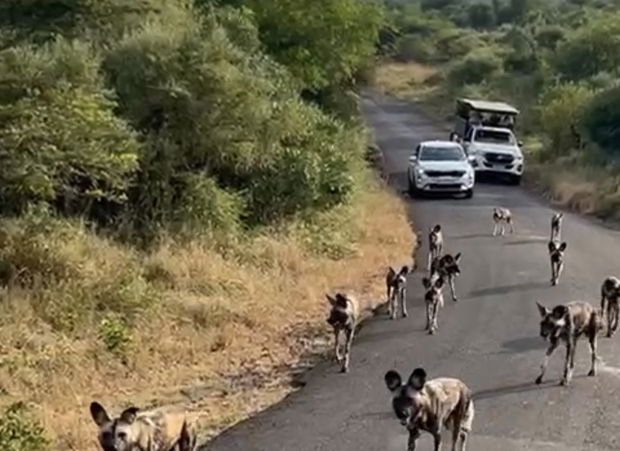
A rare and unforgettable sighting in Hluhluwe-iMfolozi
There are moments in the bush that linger long after the dust settles and the engine switches off. Moments when the wilderness feels alive in a different way — charged, electric and full of quiet tension. They are not always dramatic or loud. Often, they unfold in silence, in a slow unfolding of awareness that something extraordinary is about to happen.
Recently, guests returning to Lidiko Lodge from the Imfolozi side of Hluhluwe-iMfolozi Park shared such a moment. The excitement was unmistakable. Their voices softened as they spoke, eyes still wide, as though part of them remained out there in the golden grasslands. They had seen African wild dogs.
Not just fleeting shapes in the distance, but a full pack moving with purpose through the landscape. The early morning light caught their mottled coats, each animal uniquely patterned in shades of black, gold and white, as though painted by hand. For many seasoned travellers, this had become their most memorable sighting in Africa.
That is hardly surprising. Encountering African wild dogs is not simply a safari highlight. It is witnessing one of the continent’s most compelling and fragile conservation stories.
Often called painted wolves, these animals are among the most successful hunters in Africa. Their success rate can exceed seventy percent, far higher than that of lions or leopards. Yet their strength lies not in power or stealth, but in cooperation. Rather than ambush, wild dogs rely on endurance and communication. A hunt may stretch across open plains and through riverine bush, the pack working together with remarkable coordination, gradually tiring their prey. They can reach speeds of over sixty kilometres per hour in short bursts, but it is their stamina that ultimately secures success.
What truly sets them apart, however, is their social structure. Wild dogs live in tightly bonded packs where the needs of the group come before the individual. The young feed first, even ahead of the adults who made the kill. Injured or weaker members are cared for and never abandoned. Those unable to hunt are fed through regurgitated food brought back to them. There is an unmistakable sense of loyalty and cooperation that feels almost human in its depth. Watching them is not only thrilling, but unexpectedly moving.
Despite this extraordinary efficiency and cohesion, African wild dogs are among the most endangered carnivores in the world. Across the continent, only a few thousand remain. In South Africa, the population is estimated at fewer than five hundred and fifty individuals. Their decline has been driven by a combination of pressures. As landscapes have changed, their need for vast territories has brought them into increasing conflict with human activity. Habitat loss and fragmentation have made it difficult for packs to move freely. Encounters with livestock farmers, accidental snaring, road accidents and the spread of diseases such as rabies and distemper have all taken their toll. Competition with larger predators, particularly lions and hyenas, further limits their survival.
Unlike lions, which can tolerate relatively confined areas, wild dogs require large, connected landscapes. Packs travel extraordinary distances, often covering more than twenty kilometres in a single day. This constant movement is essential to their survival, but it also exposes them to risk whenever they move beyond protected areas.
The story of wild dogs in Hluhluwe-iMfolozi is therefore one of resilience, patience and long-term conservation. This iconic reserve, the oldest proclaimed protected area in Africa, has long stood at the forefront of wildlife recovery. It famously played a central role in saving the southern white rhino from extinction and continues to lead in predator conservation.
African wild dogs were reintroduced into the park in the 1980s after disappearing from much of KwaZulu-Natal. Since then, careful monitoring, strategic releases and ongoing research have helped rebuild their numbers. Today, Hluhluwe-iMfolozi supports several packs and serves as a source population for reintroductions into other reserves across the region. Conservation teams work collaboratively, tracking movements, maintaining genetic diversity and responding quickly to threats. Many of these animals are fitted with satellite collars, allowing researchers to follow their journeys across the landscape and intervene where necessary.
The Imfolozi section of the park offers particularly rewarding terrain for sightings. Its open savanna, rolling valleys and wide views create the sense of space these animals favour. Even so, sightings remain unpredictable. One morning the pack may be moving through the grasslands of Imfolozi, the next they could be kilometres away. When they appear, it feels less like luck and more like a gift.
Guests often describe the same sequence of sensations. A subtle tension in the air. Herds of impala staring into the distance. A guide’s voice lowering almost instinctively. Then, as though emerging from the landscape itself, the pack appears. They move silently, flowing rather than running, each individual aware of the others. And just as suddenly as they arrived, they are gone.
For conservationists, African wild dogs represent something greater than a single species. They are a symbol of hope. Their return to landscapes like Hluhluwe-iMfolozi demonstrates that with science, cooperation and long-term vision, recovery is possible. It is a reminder that conservation success is often quiet, unfolding over decades, built on persistence rather than quick victories.
Each sighting, therefore, carries deeper meaning. It is not only a moment of excitement, but evidence that these efforts are working. It reflects the resilience of both nature and the people dedicated to protecting it.
At Lidiko Lodge, we feel privileged to be based on the doorstep of this extraordinary wilderness. Guests return from Hluhluwe-iMfolozi with photographs, but more importantly with stories. Stories of connection, awe and a renewed appreciation for the natural world. Stories that remind us why travel matters and why protecting these landscapes is so important.
And sometimes, when the timing is just right, they return with the rarest story of all — the day they met the painted wolves of Africa.
Watch the clip of this sighting on Instagram: lidiko_lodge
Share This Post
Our Tripadvisor Reviews
Further Reading
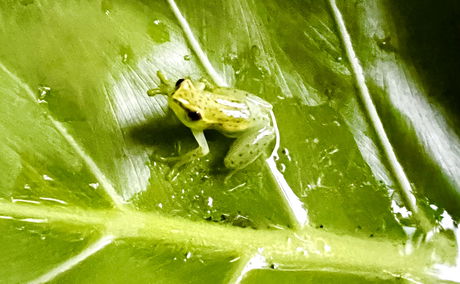
The World Beneath the Obvious, The Remarkable Small Lives in and Around St Lucia
Wed January 14, 2026
Read This Article
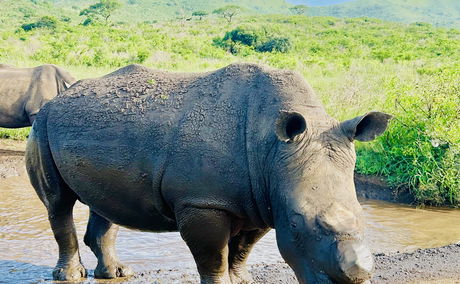
How Many Nights Do You Really Need in St Lucia, South Africa?
Thu December 25, 2025
Read This Article
St Lucia is not a destination built around ticking off attractions. It’s a place shaped by tides and wildlife, early mornings and quiet evenings — where the most memorable moments tend to unfold slowly rather than on demand. That’s why one of the most common questions we receive from guests planning a visit is also one of the most important: “How many nights should we stay?” The answer has less to do...
The Hidden Seasons of St Lucia
Thu December 4, 2025
Read This Article
A More Colourful Look at Nature’s Secret Calendar... Most travellers arrive in St Lucia expecting sunshine, sandy beaches, and safari adventures. But those who linger a little longer, who pause to watch the tide shift or listen to the night sounds from the forest, quickly realise something: this place moves to a rhythm far older and far richer than the four seasons printed on a calendar. St Lucia lives by nature’s seasons...
Share This Post